What you’ll find in this article:
- There are three things midsize manufacturers need to know about globally sourced components:
- If you rely on a single supplier or broker, you are carrying more risk than you realize. One bad container can shut down your production for weeks.
- A stocking program with a U.S.-based partner can reduce your inventory burden, eliminate cash tied up in inventory, and provide flexibility when demand changes.
- A broker may not offer the same engineering support as a manufacturing partner. When things go wrong, you may need an engineering partner to show up on your line and help you troubleshoot.
What happens when your only supplier fails?
Many mid-size manufacturers work with one broker, concentrating their supply chain in ways they may not fully recognize. As an illustration, one equipment manufacturer had 34 international shipments last year, with 29 coming from a single source in Hong Kong. That level of dependency creates vulnerability that becomes visible when something goes wrong.
When a manufacturer receives a container of defective product, their warehouse fills up with items to sort and return, all of which they’ve already paid for. Returns could be difficult, and take weeks. Production could slow, putting customer commitments at risk and leaving the business to absorb extra costs.
An example of what works can be found at the national level. The U.S. military mandates two suppliers for most products, typically in an 80/20 split, specifically to avoid single-point failures. If your single source has quality issues, capacity problems, or supply disruptions, you have no backup. The question is not whether disruptions will happen, but whether you will be prepared when they do.
What makes these situations difficult to unwind is not the defect itself, but the lack of direct ownership over who actually builds the product. That dynamic becomes clear when brokers sit between you and the manufacturer.
The difference between brokers and manufacturing partners
Brokers specialize in sourcing and coordination, and some offer value-added services—but many midsize manufacturers discover their supports disappear when problems arise.
Manufacturing partners support quality, engineering, and ongoing execution. Some also offer sourcing and logistics.
Brokers
Brokers obtain quotes from manufacturers, coordinate logistics, and pass the product on. They may not verify quality before shipment, provide engineering support, stock inventory in the U.S., or show up at your facility when there is a disruption. They also may not cover air freight, duties, and tariffs when quality issues require expedited replacement.
Manufacturing partners
Manufacturing partners take a proactive approach. They verify quality before shipment, provide engineering support to catch issues early, and can stock inventory in the U.S. for flexibility. When a problem occurs, they troubleshoot on-site and cover expedited replacements to keep operations running smoothly.
The hidden cost structure
What looks like a straightforward sourcing decision often carries hidden costs that affect cash flow. Ownership begins at the factory, which means capital is tied up for three to six months while product is in transit. Companies then carry another three to six months of inventory at their facility to mitigate risk.
What a stocking program actually looks like
There are two main approaches to stocking programs: full supplier-owned managed inventory and minimum-maximum stocking agreements. Each is designed to address different needs and inventory management challenges.
Full supplier-owned managed inventory
In this instance, the partner owns the inventory until it ships to you, taking on the carrying cost and risk that would otherwise sit on your balance sheet. You provide forecasts, and the partner handles purchasing, tariffs, and warehousing. You receive the product on a set schedule and a fixed per-unit cost.
Take one recent case: an HVAC manufacturer needed a supplier willing to own and manage inventory completely. The partner coordinates forecasting, purchasing, manufacturing, shipping, tariffs, and warehousing. The customer receives bi-weekly truckloads at a fixed per-unit cost and takes ownership only when the truck leaves the partner’s dock.
Minimum-maximum stocking agreements
In a minimum-maximum stocking agreement, inventory levels are set for each part number, and the partner replenishes stock when it reaches the minimum. You pay freight and tariffs, but the partner holds inventory. This gives you flexibility to shift orders when demand changes.
Here’s how it works in practice: a sensor manufacturer stocks 20 different part numbers, each with agreed minimum and maximum levels. For 10 months, they had been shipping 2,500 parts every other week. Then a large order came in, requiring a different product mix overnight. Because of the min-max agreement, the partner already had the inventory in place and shipped exactly what was needed.
Before entering any stocking agreement
Before entering a stock agreement, it’s important to clarify when ownership transfers, how tariff and freight fluctuations get handled, what happens if demand forecasts are wrong, and what the commitment period is for stocked inventory.
Trying to figure out the right path for your product? Contact Hankscraft to discuss your manufacturing location and inventory strategy.
Why U.S.-based engineering support matters
A manufacturing partner with U.S.-based engineering support reduces risk for programs that source globally, catching specification errors and ensuring components work as intended.
Catching specification errors before production
Drawings rarely match samples. In fact, we have yet to see a project where the drawing was completely accurate. In one case, a customer specified a wire gauge under a particular UL standard; however, the specified gauge was not within the scope of that UL standard. This type of issue is common in early-stage specifications and typically unintentional. In many cases, a broker simply won’t catch this issue.
A manufacturing partner’s engineers step in to close the gap. They review drawings and samples before quoting, identify specification errors early, and understand the application, not just the component. If there is an issue, they go to your facility and work directly on the line.
Real partnership in action
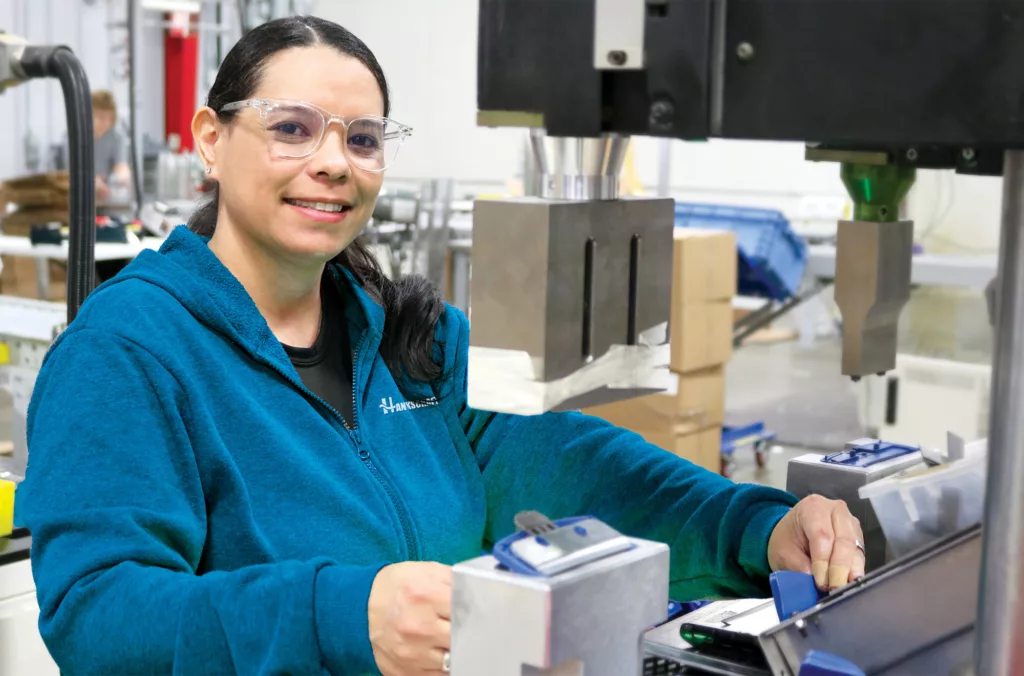
A U.S.-based manufacturing partner can make a real difference when challenges arise. We worked with a company that sourced motors whose specifications did not match the samples. Our team identified the discrepancies, extended motor life in cycle testing, and created testing fixtures that the customer did not have.
What to look for in a manufacturing partner
When selecting a manufacturing partner, it’s important to ask the right questions and be alert for potential red flags.
Questions every midsize manufacturer should ask
There are five essential questions to ask when evaluating a manufacturing partner:
- Do you have your own facility or work through third parties?
- Where is your engineering team?
- Can you stock inventory in the U.S.?
- What happens when there is a quality issue?
- Will you come to my facility to troubleshoot?
These questions reveal whether or not you are working with a manufacturing partner that can add value when things go wrong.
Red flags
It’s also important to watch for red flags. Companies that claim to do everything should raise concerns, as no one operates with 100% vertical integration. If they lack engineering resources for technical questions, you will face problems. If they handle quality issues only through replacement rather than investigation, you will not get real support. If they refuse to discuss ownership transfer or stocking terms, they may not partner well with you.
The value of a long-term partnership
Long-term relationships with a manufacturing partner can deliver benefits that go beyond simple production. Take a West Coast powersports company, for example, which has worked with the same partner for 17 years. The relationship grew from production support to full development collaboration. Both teams regularly visit each other’s sites to work through design and failure analysis, ensuring the product is built correctly. Situations like this are common in long-standing partnerships grounded in mutual trust and respect.
Ensuring supply continuity in global sourcing
Midsize U.S. manufacturers buying components globally need to think about potential quality issues in the next shipment. They should know how long it would take to recover if a supplier can’t deliver and how much cash is tied up in inventory on the water or in the warehouse. They also need the right resources to handle international logistics, verify quality, and troubleshoot problems.
Some partners will stock inventory, provide engineering support, handle quality issues, and give you production flexibility. It requires more collaboration up front, but reduces risk and total cost over time.
Looking to optimize stocking for globally sourced components? Hankscraft partners with midsize manufacturers in HVAC, pet care, outdoor equipment, powersports, sensors, and more.
With facilities and engineering teams in both the U.S. and China, we build stocking programs designed for your needs. Contact us to see how our motor solutions can support your application.
Learn More
The Cost Reduction Approaches That Kill Manufacturing Programs
Outsourcing Vs. In-House Manufacturing: Pros and Cons
Product Development Advice for Contract Manufacturing
How to Find An Electronics Contract Manufacturer
Five Benefits of a Wholly Owned Foreign Entity for Global Contract Manufacturing
How to Choose the Right Contract Manufacturing Company
Start your project Now
Ready to get started? Hankscraft will be with you every step of the way as an invaluable partner, supplier, vendor, and extension of your team.
Contact us to learn more and to start your project.